
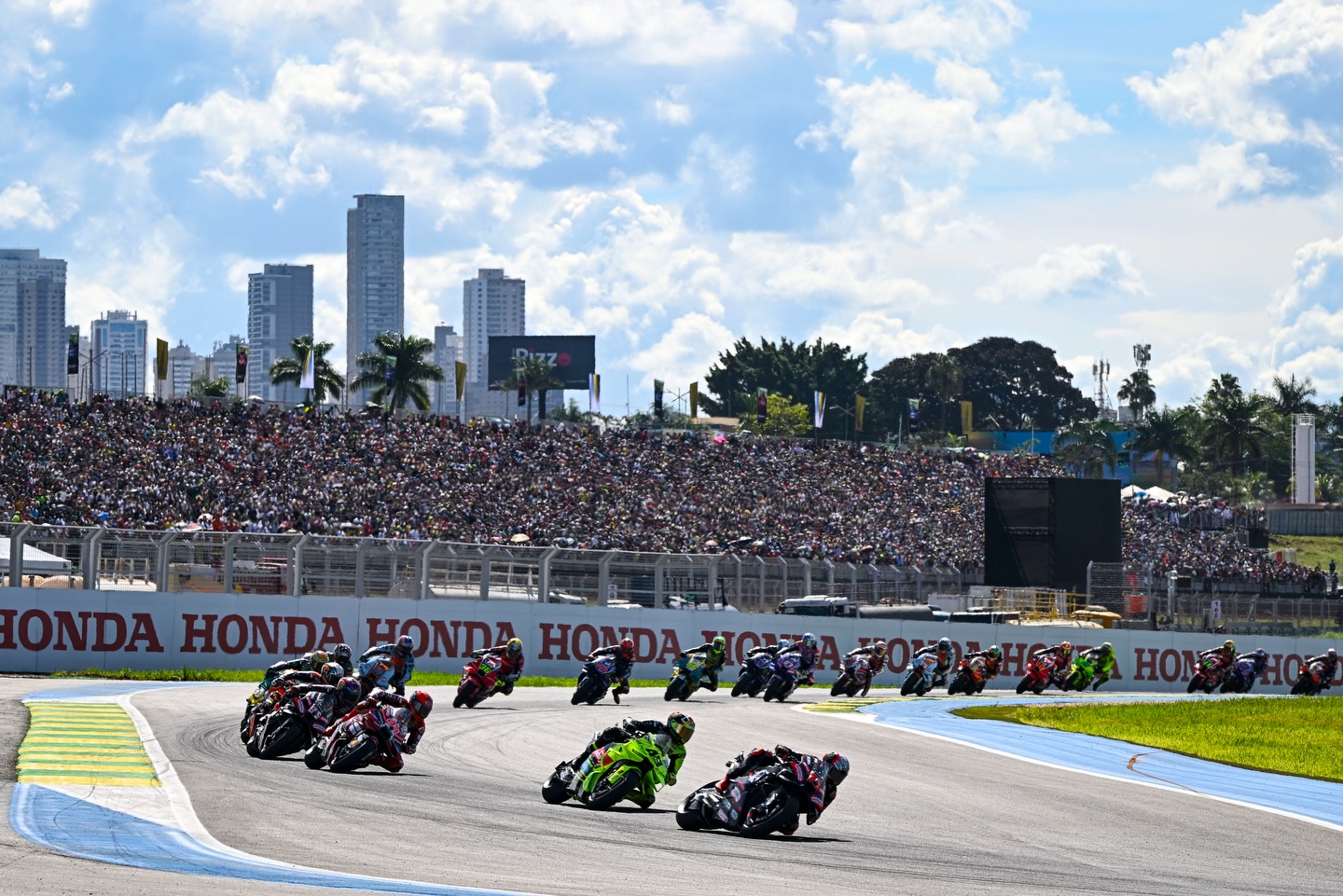
MotoGP Brazil GP: A Race That Should Never Have Happened?
MotoGP’s long awaited return to Brazil was meant to be a celebration of the revival of a historic market and fresh addition to the calendar.
Instead, the weekend at Goiânia circuit spiralled into something far less glamorous: a case study in whether the championship moved too fast, too soon.
From the outset, the warning signs were there. Days of relentless rain leading up to the event left large parts of the circuit waterlogged, with standing water disrupting sessions and forcing schedule changes. The issue wasn’t just surface-level either, water seeped beneath the track creating so-called ‘weepers’, where moisture rises back through the asphalt leaving unpredictable wet patches even in dry conditions.
And thus the perfect storm was created. Grip levels varied from corner to corner, lap by lap. The result? A crash heavy qualifying session. Even the best in the world were caught out by a surface that couldn’t be trusted.
But incredibly, the worst was still to come.
A perfect sinkhole opened up in the middle of the main straight ahead of Saturdays Sprint. Not a bump. Not a crack, but a full blown collapse of the main straight. A moment that should have stopped the weekend in its tracks, instead became a frantic race against time to patch up a circuit that was quite literally falling apart.
They say things come in threes and MotoGP can vouch for that because the troubles didn’t stop there. During Sundays race, the asphalt began to deteriorate right under the bikes due to the heat and track activity, with riders reporting chunks of asphalt flying up as they rode.
For a championship that prides itself on precision, safety, and elite-level preparation, it was an extraordinary image, and not in a good way.
This raises the unavoidable question, should MotoGP have been there at all?
Brazil’s rainy season is no secret. Hosting a race at a circuit still bedding in, and potentially not fully finished, during one of the wettest periods of the year now looks, at best, optimistic. At worst, it feels negligent.
Yes, motorsport has always dealt with weather. Wet races are part of the spectacle. But this wasn’t just weather, it was infrastructure failure. Flooding, unstable ground, and a circuit surface unable to cope with conditions underneath it.
Because while you can race in the rain, you cannot, and should not, race on a track that is physically breaking apart.
If there’s one thing MotoGP can take from this weekend, it’s how quickly the response teams reacted when things went wrong. The sinkhole on the main straight, a moment that could have completely derailed the event, was repaired in a matter of hours.
But when riders are already dealing with unpredictable grip, hidden wet patches, and standing water, the margin for error becomes dangerously thin.