
Martin Seizes Le Mans and Shifts the Championship Momentum
The 2026 French Grand Prix delivered a tense, physical and ever-shifting race at the Le Mans Circuit Bugatti, where control and composure ultimately proved just as important as outright speed.
A record-breaking crowd of over 110,000 packed into the circuit, creating a relentless atmosphere that built from lights out to the chequered flag.
The opening moments immediately set the tone. Francesco Bagnaia made a poor start, losing ground as the field charged into Turn 1, while Marco Bezzecchi launched cleanly to take the early lead. Just behind, Fabio Quartararo slotted into second, and quickly became one of the influential riders in the race.
Quartararo proved the rider can make the difference, holding position on arguably one of the weakest bikes on the grid. Around a circuit where passing is possible but never easy, the Frenchman made himself incredibly difficult to overtake. In doing so, he effectively backed the pack up and gave Bezzecchi breathing room at the front.
Further back, Pedro Acosta began carving his way forward. The aggressive, stop-start nature of the circuit suited him perfectly, turning the race into the kind of scrap where rider instinct can outweigh machinery.
At the front, however, Bezzecchi couldn’t quite break free. Running the soft rear tyre, his advantage fluctuated rather than grew. The pace was there but not the margin and it left the door open. And behind, one rider was waiting.
Jorge Martin had already shown his hand in the sprint, and once again his race craft came to the fore. Calm where others were over-riding, precise where others were drifting wide, Martin steadily reeled in the leaders as the race entered its second phase.
As grip dropped and mistakes crept in, he moved forward decisively.
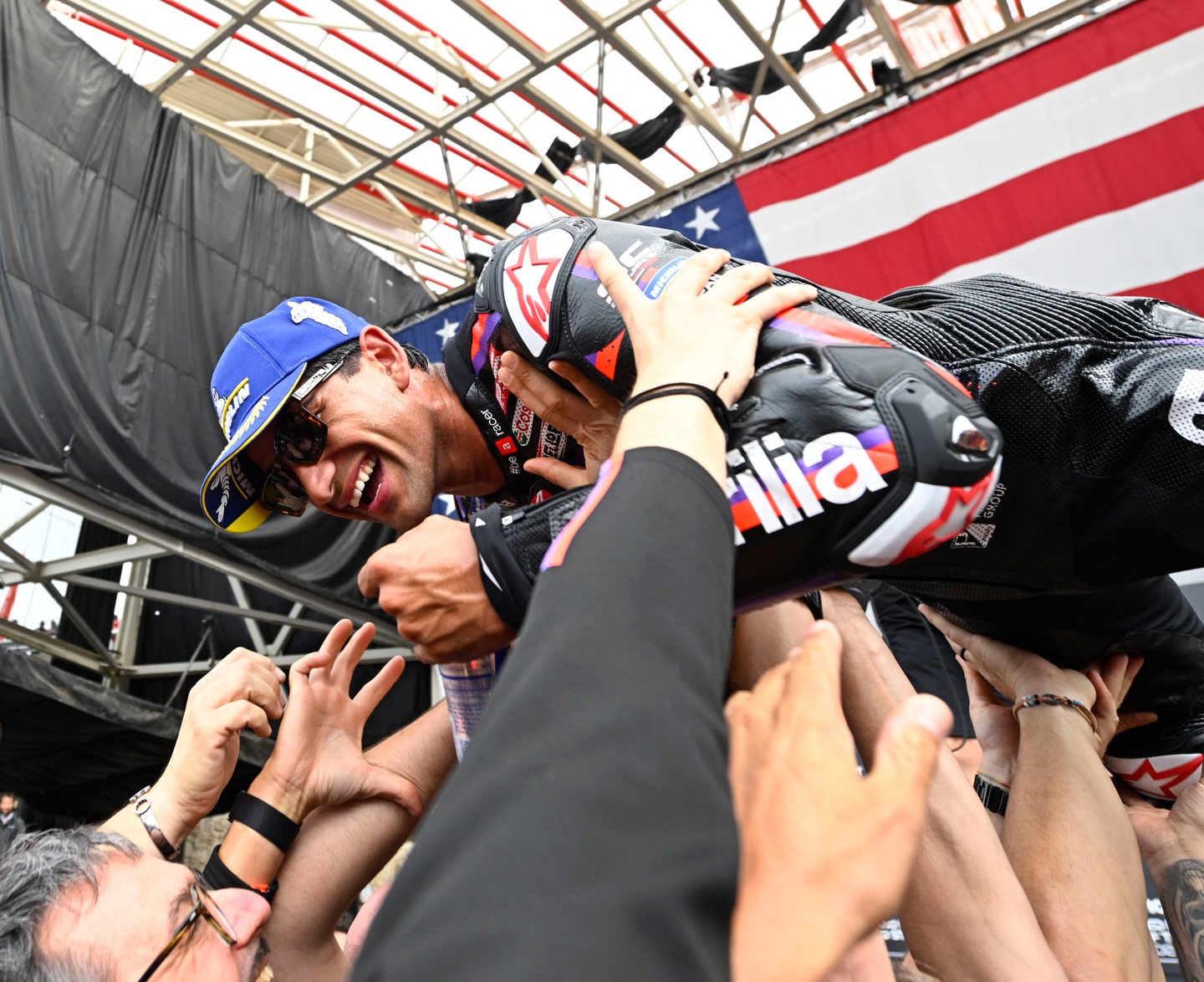
When the moment came, Martin struck, taking control of the race and immediately settling into a rhythm no one else could match. From there, he managed the race to perfection, taking victory and completing a dominant Le Mans weekend with both sprint and Grand Prix wins.
Bezzecchi, who had led much of the early running, was forced to settle for second. His pace had been strong, but tyre limitations and Martin’s late-race pace left him without an answer.
The standout performance behind them came from Ai Ogura, who secured a remarkable third place. In a race defined by pressure and attrition, his clean, controlled ride allowed him to capitalise and secure a deserved podium.
Elsewhere, the race unravelled for Bagnaia. After showing promising pace in recent sessions, he struggled to convert it into race stability, running wide on multiple occasions before crashing out. It marked another difficult chapter in a run of inconsistent results, stretching back months.
There were also signs of a shifting technical landscape. Ducati’s evolving aerodynamic direction, explored by riders such as Fabio Di Giannantonio and Alex Marquez, hinted at divergence within the camp, while Honda’s improved stability under braking showed quiet but significant progress.
But ultimately, Le Mans once again came down to the rider.
In front of a record crowd, on a circuit that punishes hesitation and rewards commitment, it was Martin who delivered the complete performance, speed, control, and precision under pressure. With it, he didn’t just win the race, he shifted the momentum of the championship.