
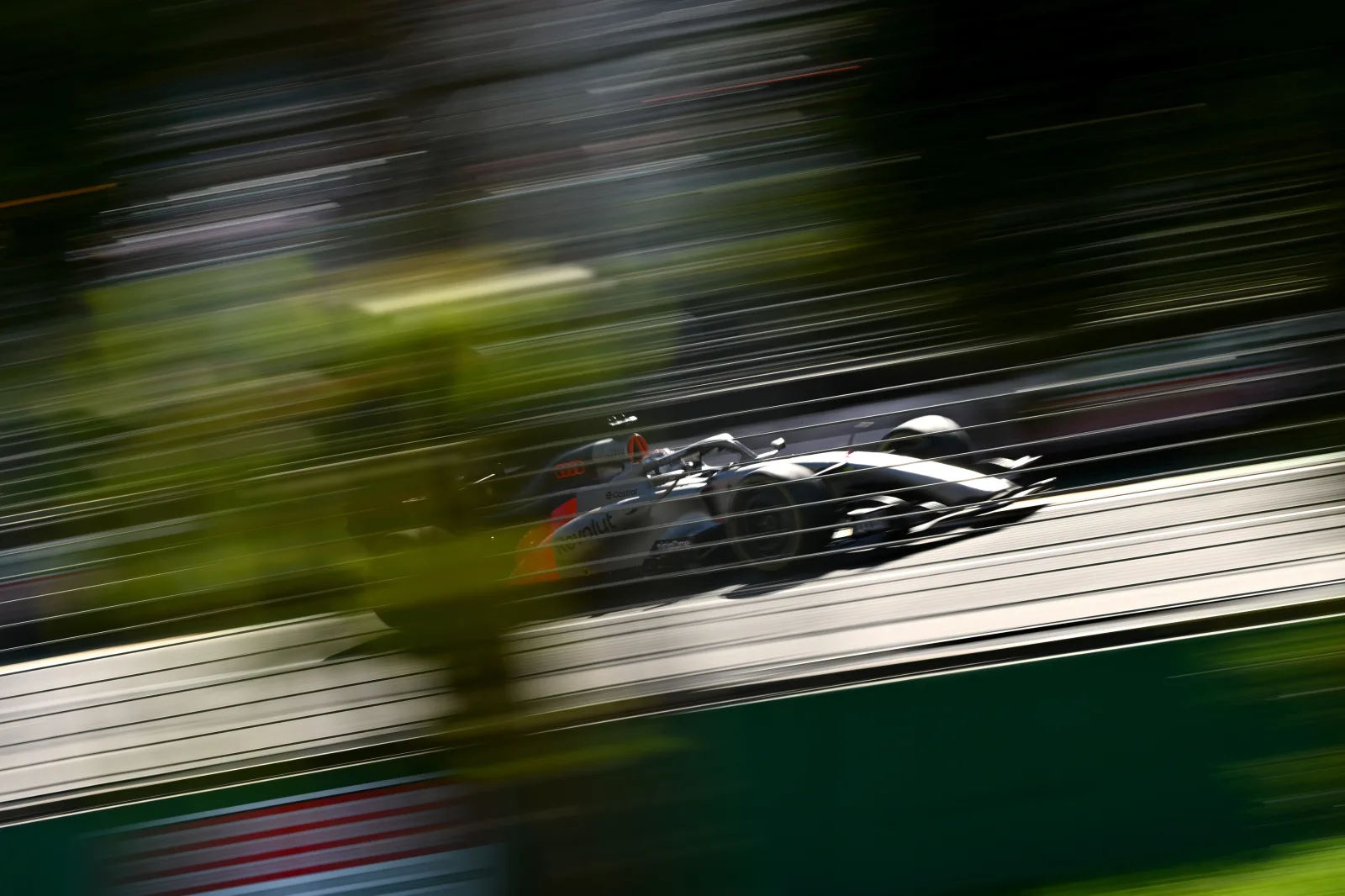
Suzuka has a way of stripping things back. The circuit’s flowing severity removes comfort and exposes reality with rare efficiency, and on Saturday afternoon it delivered one of the most telling moments of the 2026 Formula 1 season so far. Kimi Antonelli, still a teenager but already carrying the expectations of a title contender, took pole position for the Japanese Grand Prix with a lap that was decisive, composed and unmistakably mature.
The Mercedes driver’s 1:28.778 secured a front?row lockout for the Silver Arrows ahead of George Russell and marked Antonelli’s second consecutive pole. Suzuka rewards commitment, but only when it is paired with control, and Antonelli’s lap had both in abundance.
“It feels great to take pole position here at Suzuka,” Antonelli said afterwards. “It’s such a brilliant circuit and you really have to push to the limit in qualifying. The car wasn’t straightforward – it was a bit snappy and we had some tyre overheating – but we were able to put together two solid laps in Q3, and thankfully the pace was there.”
Grip levels evolved slowly, traffic management became critical as the session went on, and the margin between a clean lap and a compromised one was measured in millimetres. Antonelli looked comfortable within those constraints.
Alongside him on the front row sits Russell, though his route there was far less serene. The Briton struggled with balance throughout the session after set?up changes made between FP3 and qualifying unsettled the car.
“That was not a straightforward qualifying session on my side of the garage,” Russell admitted. “We made a small change after FP3 to balance the car, but it made it a lot more difficult to drive. I was struggling with oversteer and tyre overheating, and we had to take quite a bit of front wing out. Ending up P2 is not a bad result given how tricky it was.”
Russell’s assessment carried an implicit acknowledgement of the challenge now facing Mercedes: they have two drivers operating at the front, but responding to the car in increasingly different ways. At Suzuka, Antonelli’s adaptability proved decisive.
Behind the Mercedes pair, Oscar Piastri delivered one of the quiet performances of the day. Third place on the grid represented McLaren’s strongest qualifying of the season and a personal reset for a driver who arrived in Japan yet to even start a grand prix in 2026.
“We know what went wrong earlier in the season,” Piastri said this weekend. “There’s no point dwelling on it. Suzuka is a good place to reset because it demands everything from you.”
Ferrari, by contrast, left qualifying with the familiar sense of close but no cigar. Charles Leclerc briefly looked capable of challenging the Mercedes pair but lost momentum on his final lap after a snap of oversteer, consigning him to fourth. Lewis Hamilton followed in sixth, split by Lando Norris.
Norris’s fifth place told its own story. After renewed reliability concerns earlier in the weekend, simply reaching Q3 with a representative lap was an achievement. “It wasn’t the cleanest build?up,” Norris acknowledged, “but getting the lap together when it mattered was important.” His position ahead of Hamilton underlined McLaren’s growing one?lap confidence, even if outright pace remains a fraction short of Mercedes.
The session’s largest shock arrived before Q3 could begin. Max Verstappen, a four?time Japanese Grand Prix winner and a driver whose relationship with Suzuka borders on the mythic, was eliminated in Q2. His Red Bull struggled with rotation and mid?corner stability, and despite a late push he could manage only 11th.
Over team radio, the frustration was unmistakable. The car was described as “completely undriveable”, and the sense of disbelief lingered long after the chequered flag fell. Verstappen will start Sunday’s race mired in traffic on a circuit where overtaking is notoriously difficult, his aura of Suzuka invincibility abruptly punctured.
His team?mate, Isack Hadjar, compounded the contrast by reaching Q3 and qualifying eighth. It was the second time this season Hadjar has out?qualified Verstappen, reinforcing the sense that Red Bull’s struggles are structural rather than situational.
Further down the order, Pierre Gasly’s seventh place for Alpine stood out as one of the day’s best performances. Audi continued its steady progress with Gabriel Bortoleto in ninth, while Racing Bulls rookie Arvid Lindblad rounded out the top ten after a composed recovery from an earlier lap deletion.
At the rear, the result was familiar and unwelcome for Williams with both cars exiting early with Carlos Sainz only 16th and Alex Albon 17th, while Cadillac and Aston Martin filled the final rows after failing to find confidence or performance in Q1.
As the paddock absorbed the session, attention inevitably returned to the front. Antonelli’s pole was not merely fast; it was controlled, repeatable, and earned under pressure.
“The start will be key,” he acknowledged. “But we’re just focused on ourselves and what we can do to hold the lead into turn one.”
In a season starting to find its defining rhythm we see that Mercedes remain the reference. McLaren are re?establishing themselves. Ferrari are close but incomplete. And Red Bull faces a recovery mission.
And on pole sits a driver who no longer feels like the future. At Suzuka, Andrea Kimi Antonelli looked entirely at home in the present.