
The 2026 Australian Grand Prix in Review
by Michael Radley - F1 Chief Editor
A New Era Roars to Life
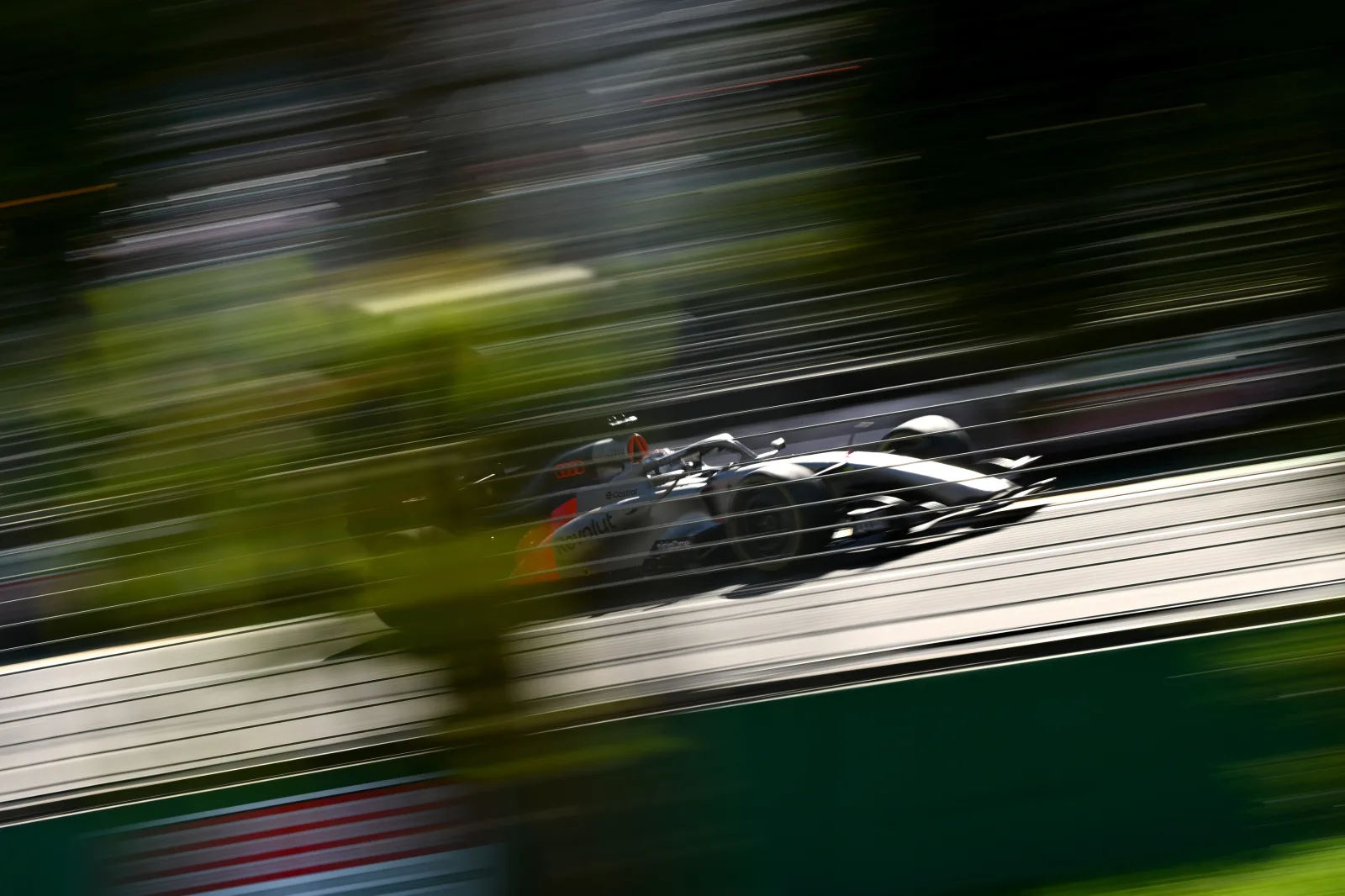
The first race of Formula 1’s bold new era did not ease itself into history. Instead, the 2026 Australian Grand Prix arrived with chaos, strategy, controversy, and — after months of conjecture, finally some clarity. Under sunny Melbourne skies at Albert Park, George Russell delivered a composed and authoritative victory, leading Kimi Antonelli home in a commanding Mercedes one two, as the Silver Arrows laid down an early marker for the season ahead.
But while the result looked emphatic on paper, the path to victory was anything but straightforward. Ferrari struck first, Virtual Safety Cars reshaped the race, and Formula 1’s new renewable energy focused regulations ensured that every lap felt like a strategic chess match rather than a simple sprint.
Disaster Before the Start
The drama began before the race had even officially started. In front of his home crowd, Oscar Piastri’s Australian Grand Prix ended on the reconnaissance lap when his McLaren snapped sideways over the Turn 4 kerb and hit the wall, ruling him out before a wheel was turned in anger. It was a crushing moment for the Melbourne crowd and an early reminder of how unforgiving the new cars could be.
Audi also suffered an early blow, with Nico Hülkenberg unable to take the start due to a technical issue on the grid. By the time the lights went out, two cars were already spectators.
Ferrari Fire the First Shot
When racing finally got underway, Ferrari executed the start everyone expected. They have developed a smaller turbo that spools up quicker than the others developed on the grid and it is giving them a huge advantage when it comes to the start of the race. Charles Leclerc launched superbly from the second row, sweeping past Russell into Turn 1 and seizing the lead. Within a lap, Lewis Hamilton had also closed onto the leaders, setting up an intense early fight at the front.
What followed was one of the most captivating opening sequences seen at Albert Park in years. Under the new regulations — which place far greater emphasis on electrical energy deployment — Russell and Leclerc traded the lead multiple times in the opening laps, each attack carefully timed around available power boosts. The pair swapped positions repeatedly as the crowd witnessed Formula 1’s new tactical dimension play out in real time.
Behind them, Antonelli dropped back early but began a steady recovery, while Max Verstappen, starting near the back after his qualifying crash, immediately went on the attack.
The Virtual Safety Car Turns the Race
The race pivoted on lap 11, when Isack Hadjar’s Red Bull suffered a technical failure and stopped on circuit, triggering the first Virtual Safety Car (VSC). In that instant, the Grand Prix split into two strategic paths.
Mercedes reacted decisively, pitting both Russell and Antonelli and committing to a onestop strategy. Ferrari, however, chose to keep Leclerc and Hamilton on track, gambling that track position and fresher tyres later in the race would offset the time lost by pitting under greenflag conditions.
A second VSC later in the race — caused by Valtteri Bottas’ Cadillac stopping near pit entry — appeared to offered Ferrari a chance take advantage for a quick pitstop, however, they were forced to stay out as the pit lane was closed to allow marshals to remove the stranded Cadillac from the track.
Mercedes Take Control
Once pit cycles played out, Russell and Antonelli emerged back at the front. From there, the race settled into a tense but controlled phase. Mercedes’ ability to manage tyre degradation under the new rules proved decisive. Despite running older rubber than their Ferrari rivals, Russell consistently maintained enough pace to stay out of range.
Antonelli’s drive was particularly impressive. After a shaky start, the teenager showed maturity beyond his years, holding station behind Russell and ensuring Mercedes could control the tempo of the race without intrateam pressure.
Ferrari’s hopes rested on their later stops, but despite fresher tyres, neither Leclerc nor Hamilton could close the gap sufficiently to force Mercedes into a second stop. The onestop strategy held.
Russell Seals the Win
In the closing laps, Russell remained untroubled. Carefully nursing his tyres while responding to any late Ferrari threats, he crossed the line after 58 laps to claim victory by 2.974 seconds, recording the first win of the 2026 season and the first under the new regulations.
Antonelli followed him home to complete the Mercedes onetwo, while Leclerc rounded out the podium in third, having led much of the opening phase. Hamilton finished fourth, just behind his teammate.
Further back, Lando Norris claimed fifth for McLaren after a measured drive, while Verstappen completed a remarkable recovery from the back of the grid to finish sixth — a performance that earned him Driver of the Day honours and the race’s fastest lap.
Midfield Battles and Attrition
The midfield race was no less dramatic. Oliver Bearman delivered a strong drive to seventh for Haas, while Arvid Lindblad impressed on his Formula 1 debut by finishing eighth for Racing Bulls. Gabriel Bortoleto scored points on debut for Audi with ninth, and Pierre Gasly rounded out the top ten for Alpine.
Reliability, however, was a clear concern. In total, six drivers failed to finish, including Hadjar, Alonso, Bottas, and the alreadyretired Piastri and Hülkenberg — a reminder that the new power units are still very much a work in progress.
Record Crowds and a City on Show
Off track, the Australian Grand Prix continued its remarkable growth in recent years. More than 480,000 fans attended across the fourday event, making 2026 the fifth consecutive recordbreaking year for the Melbourne race. Albert Park once again demonstrated why it remains one of Formula 1’s most popular venues, blending worldclass racing with a festival atmosphere unmatched on the calendar.
What the Race Told Us
One race does not define a season — but it can set the narrative. In Melbourne, Mercedes emerged as the early standardbearer of Formula 1’s new era. Russell looks confident and mature, Antonelli looks ready, and the Silver Arrows appear to have a power unit and package that others will spend the coming months trying to catch.
Ferrari remain close, McLaren have work to do, and Red Bull’s recovery drive suggests they are far from out of the fight. If the Australian Grand Prix was any indication, 2026 is shaping up to be a season defined not just by speed, but by strategy, adaptability, and nerve.