
Sprint Qualifying in Shanghai Sharpens the Focus
With just one practice session in the books, the F1 paddock rolled into Friday afternoon knowing there was little margin for exploration. Parc fermé would follow, the Sprint grid would be locked, and any mistake would echo through the rest of the weekend. That tension sat beneath everything as Sprint Qualifying began.
From SQ1, Mercedes looked like they were ready. While others edged cautiously into rhythm, George Russell was immediately on the pace, using his first timed lap to plant a marker and remove any doubt about progression. Andrea Kimi Antonelli followed a similar script: clean air, no drama, straight through. There was no sense of chasing the track — just executing a plan.
Elsewhere, SQ1 was about survival rather than speed. Several midfield runners burned extra laps managing traffic and tyre temperature, while Cadillac’s problems surfaced early when Sergio Pérez was unable to set a representative time following a fuel system issue identified after practice. His Sprint Qualifying effectively ended before it began, leaving the Mexican facing a long weekend from the back. The others knocked out in SQ1 were his team mate Valtteri Bottas, both Aston Martins and both Williams.
As the session got down to SQ2, the pace lifted and the margins tightened. Track evolution was modest, but clean laps seemed to became harder to find. Traffic through the long opening complex caught more than one driver out, most notably when Lando Norris encountered Antonelli on an outlap — an incident that briefly drew the attention of the stewards. No penalty followed, but it underlined how compressed the session had become.
Mercedes, again, were unflustered. Russell topped the segment, Antonelli close behind, both cars completing their work efficiently without burning unnecessary tyres. That detail mattered. With limited running and the Sprint still to come, tyre management was more than just strategic this weekend. The eliminated drivers were Colapinto, Lindblad, Bortoleto, , Lawson, Ocon and Hulkenberg.
In SQ3 most drivers opted for a single push lap rather than chasing multiple runs, aware that tyre dropoff could easily undo good work. Russell’s lap arrived early in the segment — a 1:31.520 that set expectations. The lap wasn’t scruffy or theatrical; it was measured, balanced, and relentless through the final sector. Antonelli responded, closing the gap but not the deal, ending just under three tenths adrift.
Behind them, McLaren executed cleanly, if not spectacularly. Norris extracted the maximum from his car to secure third, while Oscar Piastri followed in fifth after losing time in the final sector. Ferrari split their effort: Lewis Hamilton delivered a tidy, controlled lap for fourth, while Charles Leclerc never quite stitched his final run together, settling for sixth after a small lockup disrupted momentum.
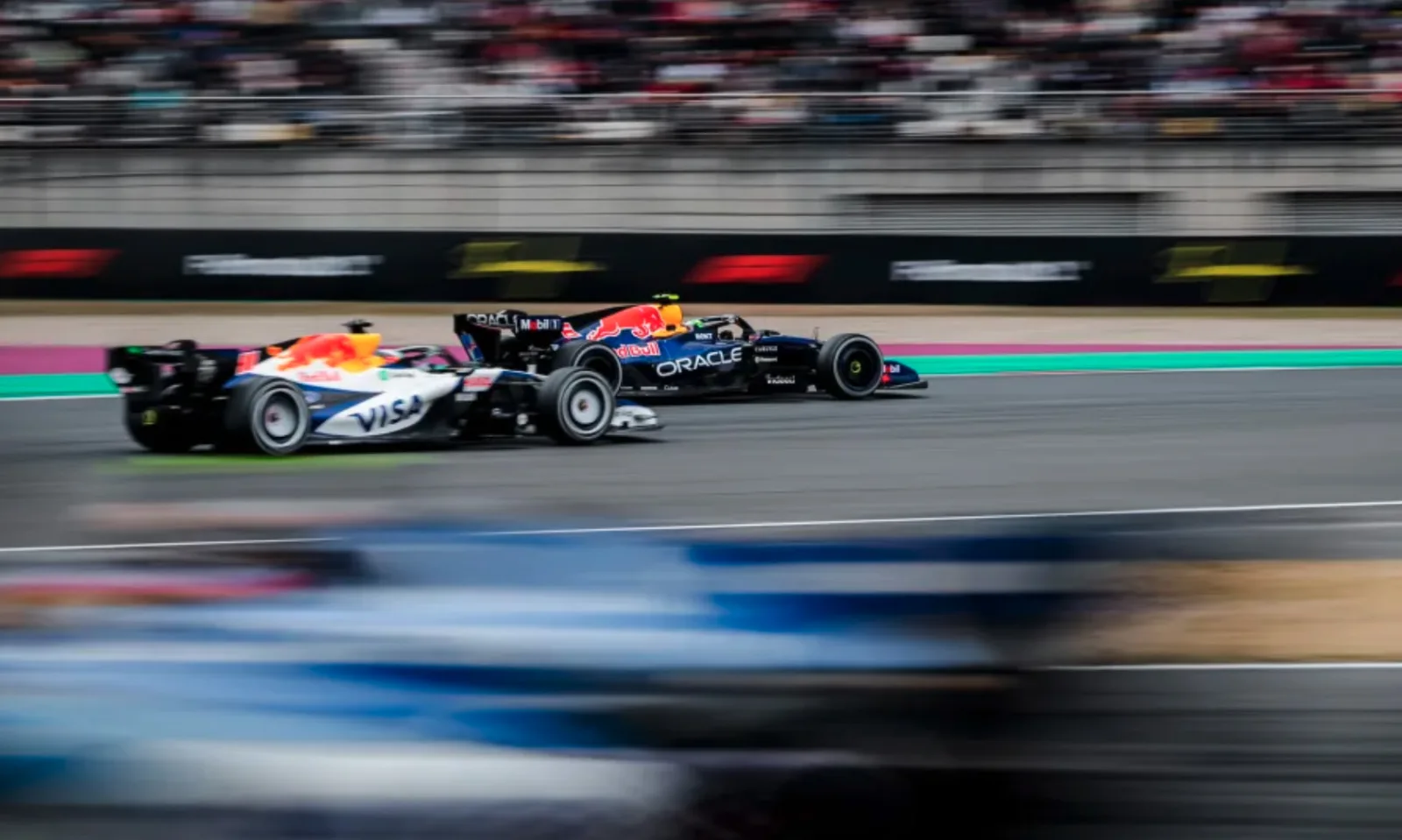
Further back, Pierre Gasly’s seventh place stood out as one of the session’s best performances — no wasted laps, no unnecessary risks, just progression. Red Bull, by contrast, looked less settled. Max Verstappen reached SQ3, but eighth place reflected a car that remained edgy under braking and reluctant on corner entry, reinforcing the sense that this is not yet a comfortable package.
When the chequered flag fell, Mercedes emerged with a frontrow lockout achieved seemingly with minimal fuss. McLaren and Ferrari followed, close enough to remain relevant but not close enough to dictate terms. The midfield remained tightly packed, and Red Bull looked unusually vulnerable.
Shanghai didn’t offer the disorder of Melbourne — but in many ways, it revealed more. Sprint Qualifying stripped the weekend back to essentials, so it could be that a clearer picture of the pecking order is emerging. And right now, no one is doing a better job than Mercedes.