
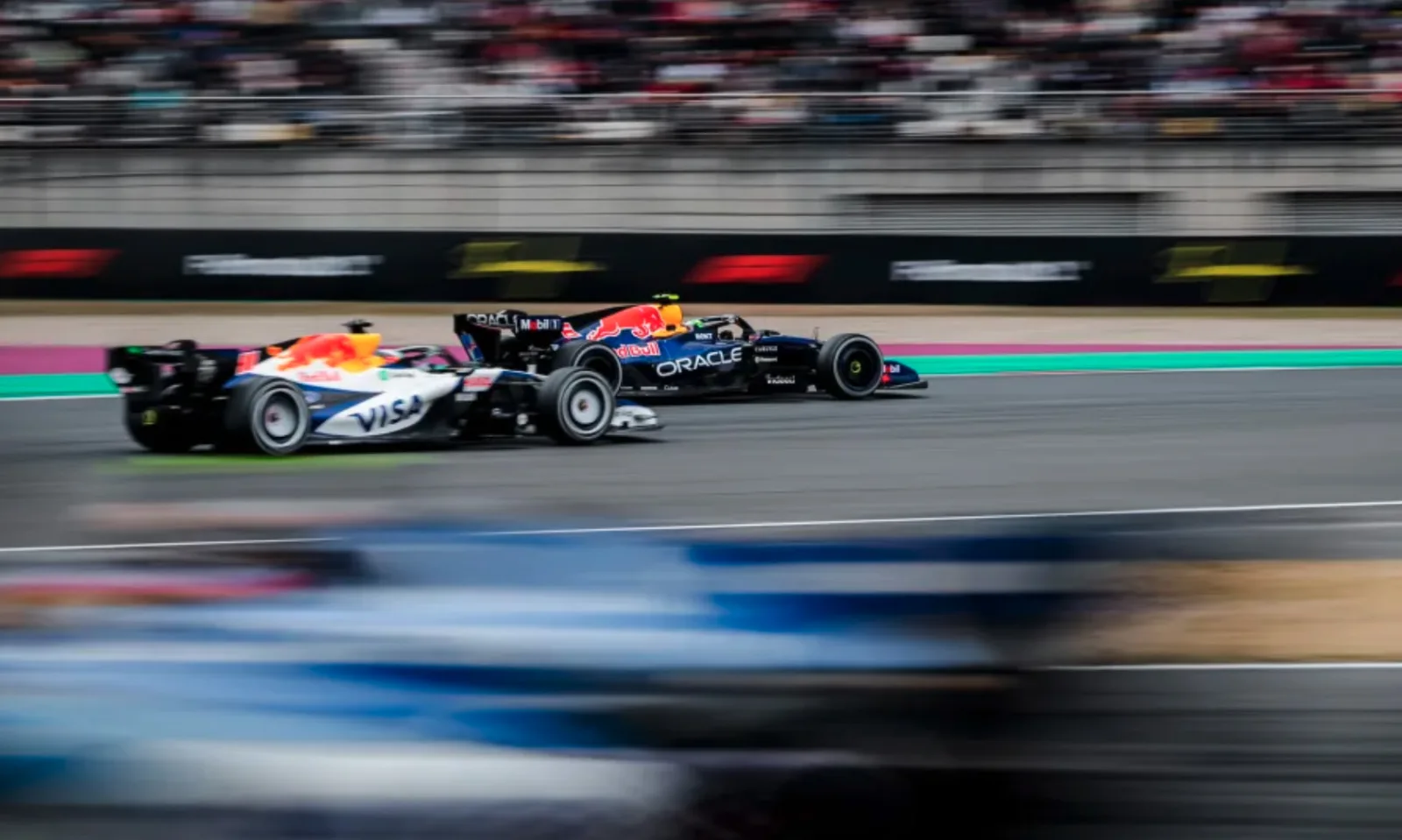
Mercedes left Saturday in Montréal with the result they wanted - pole position, victory, and control of the front of the field - but not necessarily the command that usually follows it. George Russell led home Lando Norris and team-mate Kimi Antonelli after converting a front-row lockout into a Sprint win shaped as much by their internal contest as anything around them.
Across Sprint Qualifying, the Sprint itself, and Grand Prix Qualifying, one thread ran consistently through the weekend: Mercedes were the quickest - but their advantage came with an increasingly heated rivalry.
Sprint Qualifying - Margins Measured in Hundredths
Sprint Qualifying established both the hierarchy and the dynamic between Mercedes' drivers. Russell's pole lap - a 1:12.965 - edged Antonelli by just 0.068 seconds, a tight margin on a track where margins are generally towards the small side. It's a relatively short circuit of 72 seconds with 70% of time spent on throttle. One of the most power-demanding tracks on the calendar.
On paper, it was a clean Mercedes result and the team were happy. Once you listened to the drivers in the press pen afterwards, the tone of their answers gave away a hint at something bubbling below the surface.
"I don't think there was anything between us," Antonelli said afterwards. "It just came down to the final sector."
Russell, as ever, leaned towards understatement: "It was tidy. That's what mattered." He knew he had finally landed a jab back in a fight which has been going only one way over the previous three race weekends.
Behind them, Norris and Piastri locked out the second row, close enough to punish any mistake, while Ferrari and Red Bull hovered without looking capable of imposing themselves.
Yet the important takeaway wasn't the gap to the rest. It was the absence of a gap between Russell and Antonelli. Mercedes had control as long as they didn't focus too much energy on each other at the front.
Sprint Race - Battle Turns Physical, Norris Profits
The Sprint race turned that qualifying tension into something much more tangible.
Russell led from the start, but Antonelli was assertive in the opening laps. By lap six, he was close enough to commit - launching his first attack under braking into turn one and forcing Russell into a defensive line. Russell responded, positioning his car decisively and pushing Antonelli wide. The young Italian was forced over the grass and nearly into the side of his teammate.
"I had the move there," Antonelli said. "From my side, it was clear."
Russell disagreed, and saw no reason to adapt.
It was a small exchange in isolation. In the context of a Mercedes team fighting its way back to the front, in a championship where the power deployment rules are changing weekend to weekend, it carried more weight. Both Mercedes drivers know their advantage may be taken away from them at any moment and they are desperately keen to bank as many points as they can.
The second attempt came quickly - and ended the contest. Antonelli braked later into turn eight, which is not normally an overtaking opportunity, pushed harder, and ran too deep. The exit was compromised, his momentum lost and he went off across the grass which gave Norris - alert, perfectly positioned - the opportunity to take the place.
"I didn't have to force it," Norris said. "They made it possible."
From there, Russell's race was about control, whilst Norris and Antonelli's battled it out behind him. Norris shadowed Russell without quite reaching him, closing enough to force precision without ever finding a decisive opening.
"We were there," Norris said. "Close, but not quite enough."
Antonelli, meanwhile, never quite regathered the composure required to retake second. A later attempt into Turn 1 again ran deep and wide, a sign of a driver still trying to chase his loses.
"The pace was there to fight," he said. "I just overdid it."
Behind them, Ferrari faded - Hamilton slipping back late with tyre degradation - and Verstappen remained detached in seventh, unable to enter the fight. At the flag, Russell first, Norris second, Antonelli third - a result that appeared straightforward but had been anything but.
Grand Prix Qualifying - The Duel Repeats, This Time on the Stopwatch
If the Sprint race had got the blood pressure through the roof for Mercedes boss Toto Wolff, at least Grand Prix Qualifying offered some respite, with his two drivers competing against the stopwatch rather than each other on the track.
Once again, Russell edged Antonelli to pole - again by a narrow margin - confirming that whatever exists between them may not actually be a question of pace but of execution under pressure.
"It was on the limit," Russell said. "There wasn't anything spare in that lap."
Antonelli's response suggested the same underlying frustration seen in the Sprint:
"It's twice now by a very small margin," he said. "So we know where we stand."
Mercedes are clear in their policy of not running a number one and number two. They are running two drivers operating within hundredths of each other, both capable of taking pole, both willing to race each other hard. F1 has shown time and time again over the years what this can destroy a team from the inside, and you don't have to look too far for an example. In this very team in the mid-2010s Nico Rosberg and Lewis Hamilton clashed many times and cost themselves Grand Prix victories in Belgium and in Spain. Toto has decided that this is the way to go racing currently, but there won't need to be too many more clashes before many will question the wisdom in this decision.
Behind them, the order remained familiar. Norris again in third, McLaren consistent and close; Ferrari and Red Bull present but not decisive. But the focus, increasingly, is not on who is chasing Mercedes - it is on how Mercedes manage themselves.
Fastest - But Potentially creating their own problems
Across three sessions, the facts are strongly in favour for the British driver, but Antonelli is keeping him honest.
Russell took Sprint pole, Sprint win, Grand Prix pole. Antonelli was within a tenth in qualifying, competitive in race trim, but edged out when it matters. The gap between them: negligible. The way they race each other has become completely uncompromising.
Russell's summary remained deliberately contained: "We're in a strong position."
Antonelli's hinted at something less resolved: "There are things to review."
In isolation, Montréal's Sprint incidents are minor - no penalties, no contact, no massive flashpoint. But Formula One rivalries rarely begin with something dramatic. They begin like this: two drivers, closely matched, unwilling to concede ground.
Mercedes have control of the front of the field. That much seems clear. What is less clear is how long that control remains comfortable. Sunday's race will not just test whether Mercedes are quick enough to win. It will test whether they can do so without turning their advantage into something more complicated.