
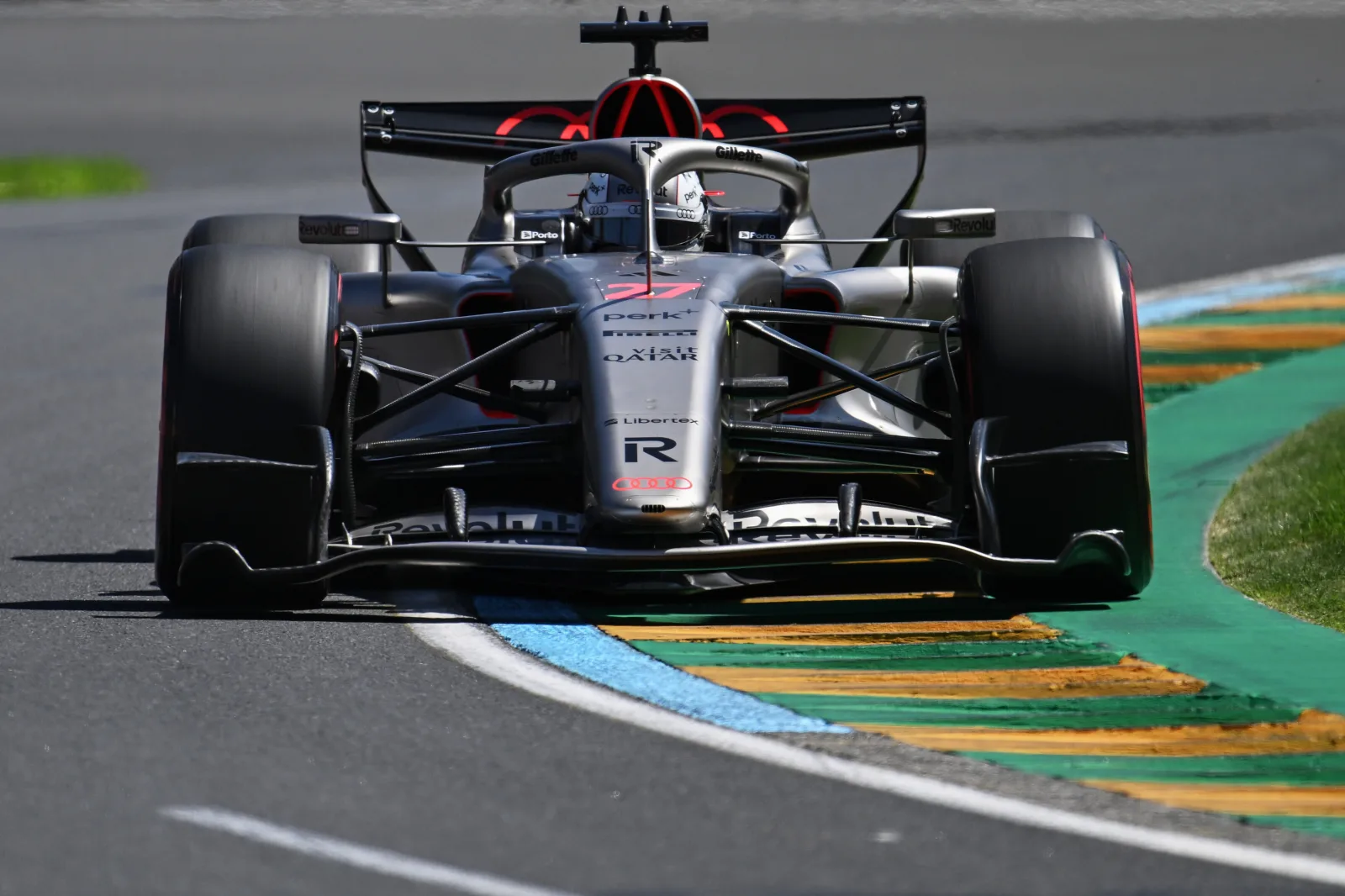
Next in the early fly away races of 2026 is Japan – a drivers’ favourite and home to many dramatic title deciders in the past, the race has been moved to an early season slot as F1 tries to further it’s green credentials. Placing races nearer to each other geographically aims to lower freight emissions which is one of the largest parts of F1’s carbon footprint.
The Chinese Grand Prix gave the 2026 Formula 1 season’s narrative a real sense of direction. Shanghai was revealing, but the long corners, heavy braking zones, and extended straights allowed teams to lean into deployment strategy, straight?line efficiency, and energy recovery. Suzuka offers a different challenge, with far fewer heavy braking zones and a wider choice of points for energy deployment. What worked previously in prescribed areas of the track, must now work everywhere on the lap, all at once.
So far the 2026 regulations have shown that energy management is no longer an overlay on performance, it is performance. Teams that looked comfortable in Australia and China did so because they understood where to harvest and where to deploy top maximum effect, often sacrificing chasing every apex flat?out.
One change has been brought in the this weekend.
Formula 1's governing body, the FIA, have announced a small modification to the energy management parameters for Qualifying at this weekend's Japanese Grand Prix.
The FIA, all 11 Formula 1 teams and the Power Unit manufacturers held talks regarding energy deployment following feedback from the drivers after the first two Grand Prix weekends of the season.
The power unit manufacturers – Mercedes, Ferrari, Red Bull Ford, Audi and Honda – unanimously agreed to a reduction of the maximum permitted energy recharge for Qualifying at Suzuka from 9 megajoules to 8 megajoules.
The governing body said this would "ensure the intended balance between energy deployment and driver performance is maintained".
Back on track, Suzuka’s defining feature is how little of the lap exists in isolation. The opening Esses immediately commit drivers to a sequence that punishes instability, under?rotation, and hesitation. Degner and Spoon then build on that pressure. These are corners where the Shanghai lessons around throttle modulation and deployment discipline matter most. Spoon, in particular will be something to look out for - a compromised exit does not just cost speed, it disrupts the energy plan for the entire final sector.
2026 marks Honda’s full return as a works power unit supplier, now exclusively partnered with Aston Martin under the radically revised power unit regulations. The shift to a 50?50 split between internal combustion and electrical deployment was always going to be complicated, however no one was expecting Aston Martin to be up to 4 seconds off the pace.
Across Australia and China, Aston Martin has failed to complete a full race distance, with Honda’s power unit suffering from severe vibration issues, battery reliability problems, and energy deployment shortfalls. Honda has acknowledged progress in reducing vibration severity, but also admitted it has not yet identified the root cause.
Unavoidably, Suzuka also reopens the comparison Honda cannot control.
For years, Honda’s hybrid success was defined by Red Bull and Max Verstappen. In 2026, that partnership is gone as Red Bull now runs its own Ford?branded power unit project. Verstappen arrives with mixed feelings about this new generation of cars. He has been outspoken about the demands of energy management and the loss of instinctive driving but this is a circuit he loves and has been able to push previous cars to new limits. We shall see if he can do the same in 2026.
Lewis Hamilton, now further into his Ferrari chapter, approaches Suzuka from a different emotional angle. He has found his feet in the first two races and, also his smile. He too has thrived here in the past and will be hoping to challenge for another podium.
At Mercedes, George Russell arrives with the quiet confidence of a driver who knows the foundations are sound. Australia and China suggested a car that is broadly balanced, if not flawless. Russell’s expectation will be that the car feels predictable through high?speed transitions and that long runs remain consistent rather than brittle. Alongside him, Kimi Antonelli faces Suzuka as a rite of passage. For a young driver, there are few circuits that reveal so much so quickly. Antonelli will be chasing headlines of course; but he will be hoping to leave Japan feeling that he understands the car even better than when he arrived.
Across most of the grid, there is a shared, if rarely articulated, hope: that Suzuka allows the driving to feel natural again. The 2026 regulations have placed heavy demands on management and foresight, turning laps into exercises in planning rather than instinct it has been argued.
However, Suzuka still holds power and mystique in modern Formula 1. It is not just a test of machinery, but of confidence and belief. Drivers need to bring their best here to leave Japan knowing more than they did before about their cars and their teams. Along the way, they may also learn more about themselves.