
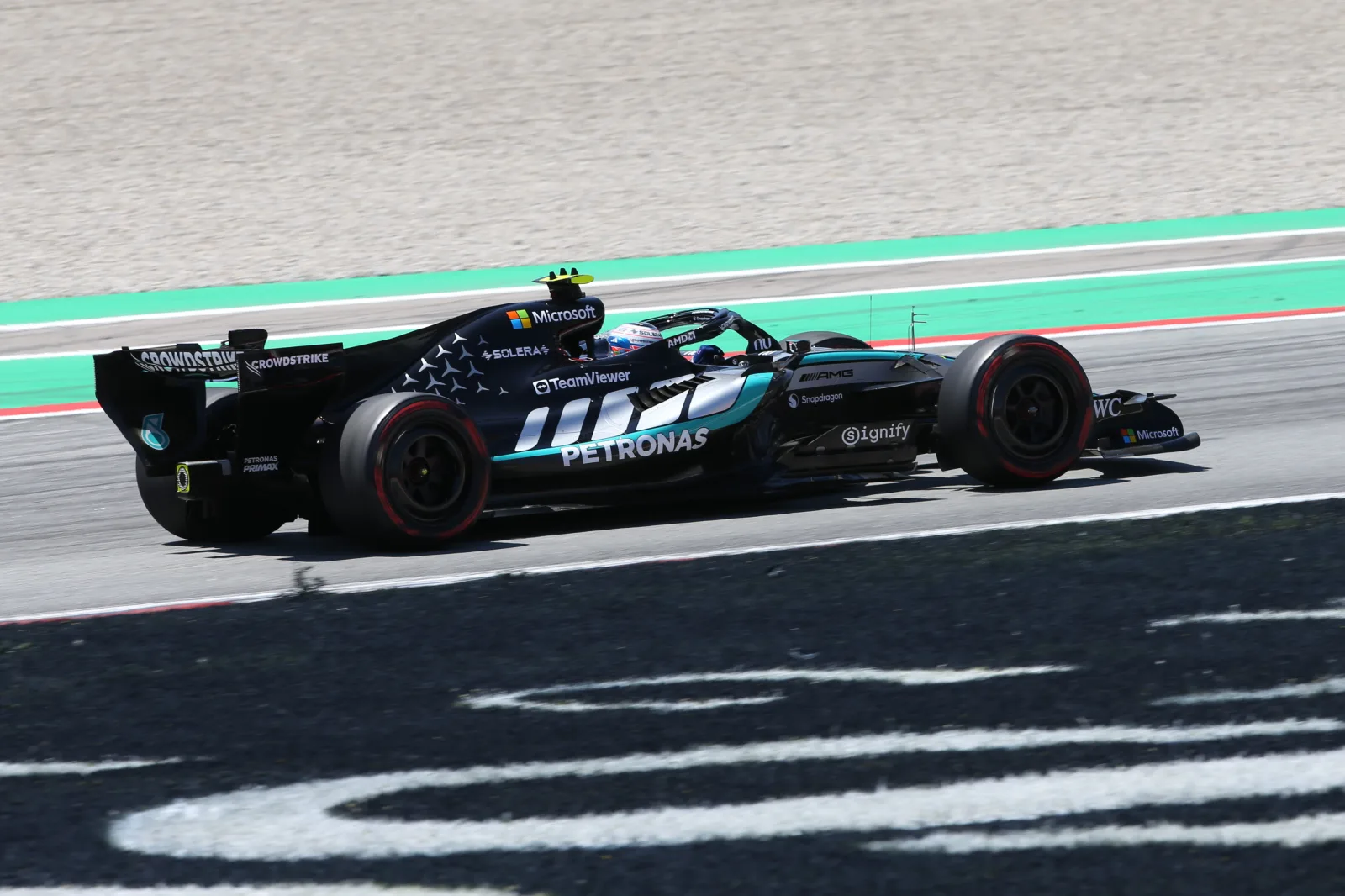
Kimi Antonelli converted pole position into a commanding victory at the 2026 Monaco Grand Prix, controlling an incident-heavy race that twice threatened to slip from his grasp but ultimately reinforced his growing dominance over the Formula 1 field.
The Mercedes driver led all 78 laps around Monte Carlo, surviving a late Safety Car, a red flag, and an eight-lap sprint to the finish to secure his fifth consecutive win of the season.
Behind him, Lewis Hamilton claimed second place for Ferrari after a composed and opportunistic race, while Isack Hadjar secured a hard-fought third following penalties that reshaped the running order in the closing stages.
The final classification, however, only reflects part of what unfolded across the afternoon, as Monaco once again produced a race shaped less by overtaking and more by attrition, execution, and the constant threat of disruption.
Clean start, early control
As is so often the case at Monaco, the race direction began to take shape within seconds of the lights going out.
Any anticipation of a battle between Antonelli and Max Verstappen disappeared almost immediately when the Red Bull driver failed to launch cleanly from second on the grid, suffering a technical issue that effectively ended his race before it had properly begun. That moment handed Antonelli the track position advantage that Monaco tends to reward, and he immediately began to build a measured gap over Hamilton behind.
By the early phase of the race, the Mercedes driver had settled into a rhythm that allowed him to extend beyond overtake range, carefully managing traffic and tyre temperatures while maintaining a pace that none of his immediate rivals could consistently match.
Behind the front two, the order quickly stabilised into tightly packed groups where even marginal differences in pace could not translate into overtaking opportunities, placing a premium on patience and execution.
Midfield contest built on discipline and opportunity
While the battle for victory evolved into a contest of control at the front, the midfield provided a more complex and unpredictable narrative that ultimately shaped the lower points positions.
Oscar Piastri produced one of the most measured performances of the race, guiding his McLaren to fourth place through consistency rather than outright pace, ensuring that he remained within range of opportunities created by incidents and penalties ahead.
His approach highlighted the discipline required at Monaco, where drivers must balance maintaining track position with avoiding the types of small errors that can have disproportionately large consequences.
Racing Bulls emerged as one of the most effective teams in this phase of the race, with Liam Lawson and Arvid Lindblad securing fifth and sixth places through clean, controlled drives that avoided the chaos affecting others. Their results were built not on overtaking manoeuvres, which remained extremely limited, but on consistent lap execution and an ability to remain composed during periods of disruption.
Hadjar's podium result, though influenced by penalties, was underpinned by a defensive drive that required sustained concentration, particularly while managing power-related limitations that made him vulnerable to pressure from behind. In a race where holding position often mattered more than gaining it, that defensive resilience proved decisive.
Penalties and errors reshape the midfield order
If the leading group demonstrated control and restraint, much of the midfield story was defined by small errors that carried significant consequences. George Russell experienced one of the most difficult races of the afternoon, collecting multiple penalties, including a pit-lane speeding infringement and a subsequent failure to serve it correctly, which resulted in a drive-through penalty that removed him from the points entirely. He was far from alone in encountering issues, as several drivers were penalised for similar pit-lane infractions, suggesting that execution under pressure became a defining factor throughout the field.
Pierre Gasly appeared to have secured a strong result on track, but accumulated penalties ultimately dropped him down the order, promoting others who had managed to stay out of the grasp of the pit lane speed trap. In Monaco conditions, where overtaking remains rare, these marginal differences in execution frequently determine the final outcome.
Reliability issues and attrition add further complexity
Mechanical reliability also played a substantial role in shaping the race, particularly within the midfield and lower order. Lando Norris' retirement due to a battery issue removed a competitive car from contention and created additional space for others to advance up the field. Elsewhere, early-race contact and technical issues disrupted the progress of several drivers, limiting their ability to capitalise on starting positions that might otherwise have translated into points. Fernando Alonso's eventual top-ten finish demonstrated how steadily navigating these challenges could be rewarded, as he secured his first point of the season.
Safety Car and red flag
The decisive turning point of the race arrived on lap 60, when Lance Stroll's crash at the final corner triggered a Safety Car that removed Antonelli's significant lead and compressed the field. This interruption provided a crucial opportunity for midfield drivers to reset their strategies, as pit stops under Safety Car conditions reduced the time cost and enabled several competitors to serve outstanding penalties without losing positions. Shortly after the restart, further disruption followed when Charles Leclerc crashed at the same corner, prompting a red flag while officials inspected and repaired a section of tarmac that had begun to deteriorate.
The race then resumed as an eight-lap sprint, with all drivers effectively reset into a condensed contest that heightened the pressure on both leaders and midfield runners. Despite the potential for further changes, the limited number of laps combined with Monaco's narrow layout meant that positions were largely preserved.
Controlled finish under pressure
At the restart, Hamilton attempted to apply pressure immediately, but Antonelli responded with a controlled and composed sequence through the opening corners that ensured he retained the lead. From that point onward, the Mercedes driver managed the race effectively, preventing any sustained challenge while maintaining sufficient pace to secure victory. Late contact between Franco Colapinto and Carlos Sainz illustrated the risks faced by those attempting to gain positions in the closing stages, but with limited opportunities available, such incidents often resulted in lost ground rather than advancement.
A race defined by execution and resilience
The 2026 Monaco Grand Prix ultimately demonstrated the characteristics that make the event unique within the Formula 1 calendar.
At the front, Antonelli delivered a complete performance that combined pace, tyre management, and composure across multiple race interruptions, securing a victory that strengthened both his championship position and his reputation. Within the midfield, the outcome was shaped less by direct competition on track and more by discipline and strategic awareness. Drivers and teams that maintained consistency were able to capitalise on penalties, retirements and changing conditions, while those who made even minor mistakes found themselves falling down the order.
Antonelli's victory reflected a race managed with control and maturity from start to finish. This maturity may well see him crowned the sport's youngest ever champion come the end of the season. Right now, it is hard to see where any challenge is going to come from.