
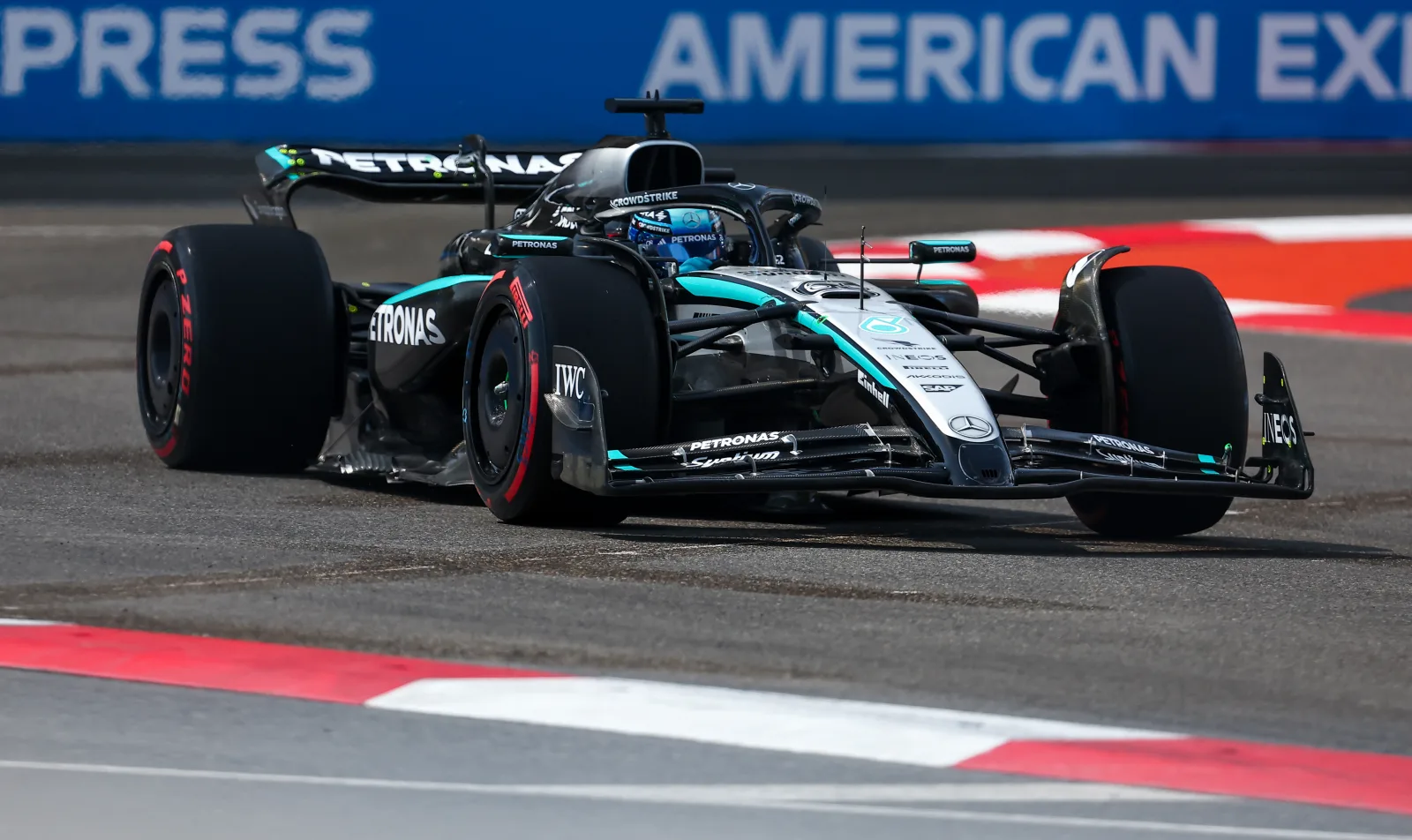
Kimi Antonelli strengthened his hold on the Formula 1 world championship with victory at the Canadian Grand Prix, profiting from a mechanical failure that denied Mercedes teammate George Russell a potential win in a race shaped by early uncertainty, intra-team tension and shifting conditions.
The Italian's fourth consecutive victory came after a race that had initially been defined by a fierce Mercedes battle at the front, before turning on a decisive moment just beyond half-distance when Russell's car lost power while leading.
Before the race started, drizzle created uncertainty on the grid at the Circuit Gilles Villeneuve, with several teams gambling on intermediate tyres on a drying track.
The disrupted start procedure - which included multiple formation laps following a technical issue for Arvind Lindblad on the grid - further complicated the picture, reducing the race distance and adding to the tension before the lights went out.
When the race eventually began, Lando Norris made immediate use of his intermediate tyre choice, surging into the lead at Turn 1.
"It felt strong off the line," Norris said. "But we knew the track was drying quickly and that made things difficult."
His lead proved to be very short-lived. As the slick tyres on his competitors came up to temperature, both Norris and teammate Oscar Piastri were forced into early pit stops, dropping down the order and effectively removing themselves from contention. Other leading teams expressed surprise that McLaren would take such a gamble with both cars when they were in a strong starting position. It seemed to be a move that teams towards the back of the grid with less to use would consider.
With McLaren's challenge ruined by their tyre choice, the race quickly developed into a direct contest between the two Mercedes drivers at the front. Russell and Antonelli exchanged positions in an intense opening phase, with the pair repeatedly running wheel-to-wheel at the front and locking their brakes into the turn 10 hairpin. Antonelli briefly took the lead before running wide, allowing Russell back through, but the pressure from the younger driver remained relentless.
"It was a great fight," Antonelli said. "We were pushing each other really hard, right on the limit." Russell, who had shown strong pace all weekend, appeared comfortable managing the situation despite the sustained pressure.
"I felt in control," he said. "The car was working well and we were managing the race."
The tyres available to the drivers were a step harder than at the same race last year and as such there were few concerns about degradation. Added to the mix the fact that 2 extra formation laps saved all the divers some fuel, it meant that they able to push flat out for much longer than normal in a full grand prix distance. All of this added to the spectacle of race. It is always hard to speculate based on a single race weekend, but this did feel like F1 figuring out the rules in a way that is more in keeping with the heritage of the sport. Perhaps something for the FIA to consider as they further analyse the rules for the rest of this season.
Behind them, Lewis Hamilton began to close in, benefitting from improved Ferrari race pace, while Max Verstappen recovered ground to remain within striking distance. Hamilton has a strong history in Canada taking 7 wins previously and looked back to his best, extracting the maximum from his car and seemingly enjoying the process as well. Whether his improved performance is due to less time in the Ferrari team simulator as he has suggested is something for team boss Fred Vasseur to investigate. But whatever his preparation was for this weekend, it certainly worked.
Back in the race, the outcome shifted dramatically when Russell, leading and right in the battle for victory, was forced to retire. A sudden loss of power saw the Mercedes grind to a halt around the halfway mark, prompting a Virtual Safety Car.
"It's devastating," Russell said afterwards. "We had everything under control and then it's just gone." The retirement not only ended the duel that had brought the race to life, but handed Antonelli a clear path to victory. Following Russell's exit, attention turned to the fight for the remaining podium places.
Hamilton continued his strong pace and, in the closing laps, passed Verstappen with a decisive move into Turn 1 to secure second place.
"That felt like an important step forward for us," Hamilton said. "The car felt much better in the race and I could really attack at the end." Verstappen held on for third, securing his first podium of the year after a difficult start to the campaign.
"We did what we could today," Verstappen said. "It's not where we want to be, but it's progress."
With his closest challenger out and those behind engaged in their own battle, Antonelli managed the final stages calmly. He extended his advantage to more than ten seconds by the finish, a margin that shows Mercedes' rivals still have a distance to go to be truly competitive. Antonelli had spent half the race fighting with his team-mate and managed the car for the rest of it to finish comfortably clear.
"It wasn't the cleanest race, but we stayed focused," Antonelli said. "We took the opportunity when it came and managed everything from there." The victory extends his championship lead and reinforces his status as the early favourite for the title.
The Canadian Grand Prix underlined both the strength and fragility of Mercedes' position. While the team demonstrated clear race-winning pace, Russell's retirement proved costly for himself in the championship context. He knows he needs to win more than Sprint races if he is to seriously challenge for this year's world championship. Ferrari, meanwhile, will take encouragement from Hamilton's performance, which suggested a more competitive outlook in race trim.
As the championship moves on to the crown jewel, Monaco, the momentum appears firmly with Antonelli. In Montreal, it was not a flawless victory - but it was a decisive one.