
Formula 1 has moved swiftly this week to adjust its much debated 2026 power unit regulations, announcing a package of refinements designed to address mounting concerns from drivers, teams and the FIA itself after the opening three races of the season. Following an online meeting on 20 April 2026 involving the FIA, Formula One Management, team principals and power unit manufacturers, a set of targeted changes was agreed unanimously and is set to be implemented from the Miami Grand Prix, subject to formal ratification by the FIA World Motor Sport Council.
These revisions are not a wholesale rethink of the 2026 concept, which fundamentally reshaped F1 around a near 50:50 split between internal combustion and electric power, but rather an attempt to correct unintended consequences that became increasingly visible in Australia, China and Japan. Chief among those concerns were excessive energy management in qualifying, large speed differentials in races, and the associated safety risks highlighted by Oliver Bearman’s heavy accident at Suzuka.
The 2026 regulations were designed to modernise Formula 1, improve sustainability, and align the sport with road car technology. In practice, the early races revealed behaviour that many felt ran counter to the essence of F1. Drivers were frequently forced to lift and coast on qualifying laps to harvest energy, while “super clipping” — where electrical energy is diverted into the battery even at full throttle — led to counter intuitive deceleration on straights. Drivers complained this diminished their ability to push flat out and created unpredictable speed variations that could catch a following car unawares.
Safety concerns sharpened the debate as data from the Japanese Grand Prix showed stark closing speed differentials between cars harvesting energy and those deploying full power, a factor repeatedly cited by the FIA in its justification for intervention. As FIA President Mohammed Ben Sulayem put it, the priority was “safe, fair and competitive racing”, with driver input playing a central role in shaping the response.
The most immediate and significant changes apply to qualifying. The FIA confirmed that the maximum permitted energy recharge per lap has been reduced from 8 megajoules to 7 megajoules. This lowers the amount of energy drivers must harvest and, crucially, reduces the incentive for lift and coast behaviour during a flying lap.
Alongside this, the maximum “super clip” power has been increased from 250 kW to 350 kW. This allows drivers to recover more energy while remaining at full throttle, cutting down the time spent in artificial energy saving modes and returning qualifying to a more recognisably flat out contest. The FIA estimates these changes will limit super clipping to around 2–4 seconds per lap, down from much longer durations seen earlier in the season.
A further tweak increases flexibility across the calendar. The number of events at which alternative (lower) energy limits may be applied has risen from eight to twelve, enabling the FIA to better tailor energy parameters to circuits with different characteristics, such as long straights or high speed corner profiles.
In race trim, the focus shifts from driver workload to safety and consistency of performance. The FIA has introduced a cap on the extra power available through the electric “boost” function. Under the revised rules, the maximum boost is limited to +150 kW, or the car’s current power level at activation if that is higher, preventing sudden spikes in performance between cars with different battery states.
Energy deployment from the MGU K has also been made more context dependent. Full deployment at 350 kW will be retained in key acceleration zones — from corner exit to braking points, including designated overtaking areas — but will be reduced to 250 kW elsewhere on the lap. According to the FIA, this strikes a balance between limiting excessive closing speeds and maintaining overtaking opportunities, rather than flattening performance entirely.
In theory, these measures will directly address the safety risks highlighted by drivers and teams, while preserving the hybrid character of the new power units and the sporting spectacle intended by the original regulations.
One of the more novel elements of this week’s announcement concerns race starts. Instead of being implemented permanently, the FIA will trial a new “low power start detection” system during the Miami Grand Prix weekend. This system identifies cars that accelerate abnormally slowly after the clutch is released and automatically deploys additional MGU K power to ensure a minimum acceleration level.
The intention is purely safety driven: to reduce the risk of a slow starting car being struck by a faster one behind, without conferring any sporting advantage. Feedback and data from Miami will determine whether the system is formally adopted for the remainder of the season.
While energy management dominates the narrative, the FIA also confirmed complementary changes aimed at improving control and safety in wet conditions. These include refinements to energy deployment in low grip scenarios and measures to improve start phase visibility, although fewer technical details have been released publicly at this stage.
Importantly, these changes were agreed unanimously, a notable outcome given the competitive sensitivities around power unit performance. Team principals repeatedly stressed that the approach was one of fine tuning rather than reversal, with Mercedes boss Toto Wolff describing it as using “a scalpel, not a baseball bat”. The FIA has been careful to emphasise that the core objectives of the 2026 rules — sustainability, relevance and technological challenge — remain intact.
That unanimity also reflects broader concern that unresolved issues could undermine confidence in the new era, particularly as manufacturers such as Audi have spent a lot of time and money to enter the sport and significant further investment hangs on competitive stability.
Taken together, the engine rule changes announced this week represent Formula 1’s first major act of in season regulation correction under the 2026 framework. They aim to restore qualifying as a pure test of speed, reduce hazardous speed differentials in races, and demonstrate that the FIA is willing to respond quickly to empirical data and driver feedback.
Whether these refinements fully resolve the concerns remains to be seen. Miami will act as the first real world proving ground, and further adjustments cannot be ruled out as teams and drivers continue to explore the limits of F1’s most electrically driven era yet. For now, the message from the FIA is clear: the direction of travel remains unchanged, but the path to get there is being actively and pragmatically reshaped.
An Early Season Reset for F1’s 2026 Engine Rules
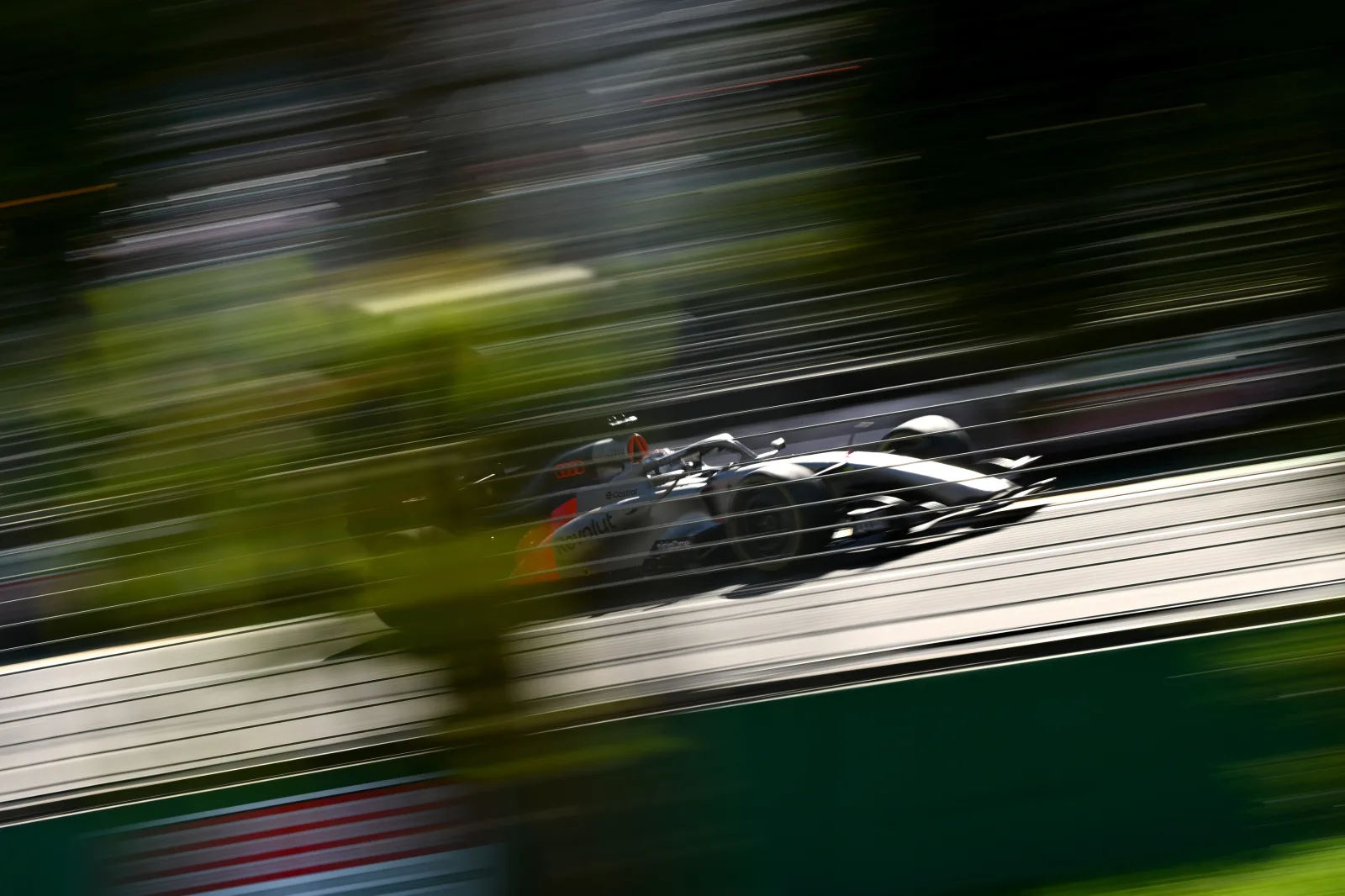
Nico Hulkenberg
© YSW Admin

Prosnap Academy
Could you be one of our F1, MotoGP or Football contributors?
Training packages and contributor opportunities are available now through Prosnap Academy.